

Few things in cooking feel as magical as turning oil and water into a smooth, creamy masterpiece. That’s exactly what happens when making emulsion sauces. From velvety mayonnaise to rich hollandaise and tangy vinaigrettes, emulsions play a huge role in everyday cooking.
Whether you’re whisking together a quick salad dressing or creating a luxurious French sauce, understanding emulsions can instantly improve your cooking skills. The good news? You don’t need to be a professional chef to master them.
In this ultimate guide, you’ll learn the science behind emulsions, discover the most popular emulsion sauces, and pick up expert tricks for creating stable, flavorful sauces every time. Along the way, we’ll also cover common mistakes, storage tips, healthier options, and creative uses.
In This Post
What Is an Emulsion?
An emulsion forms when two liquids that normally don’t mix, usually oil and water, are combined into a stable mixture. Since oil and water naturally separate, an emulsifier is needed to hold them together.
Think about mayonnaise. Oil and lemon juice don’t naturally blend, but egg yolks contain lecithin, which acts as an emulsifier and keeps the sauce creamy and stable.
There are two main phases in an emulsion:
- Dispersed phase: Tiny droplets spread throughout the mixture
- Continuous phase: The liquid surrounding those droplets
In simple terms, one liquid gets suspended inside another.
Why It’s Worth It
- They make everything taste more expensive – instantly
- Most take under 10 minutes to make from scratch
- You control the flavor completely – salt, acid, richness, heat
- Covers everything from salad dressing to steak sauce
- Once you understand the technique, every variation is easy
- Homemade always tastes fresher and brighter than store-bought
- Great for meal prep and elevating everyday weeknight dinners
- Deeply satisfying to make – especially that first perfect batch
The Simple Science Behind Them
You don’t need a chemistry degree to make a great emulsion. But knowing just a little about how they work makes everything easier, and less stressful when things go sideways.
“Oil and water don’t mix – but with the right emulsifier, you can make them stay together beautifully.”
Emulsions work because emulsifying agents have a unique molecular structure: one end is attracted to water, the other to fat. Lecithin in egg yolks is the most powerful natural emulsifier in cooking. It surrounds tiny droplets of oil and holds them suspended in the liquid, creating a stable, creamy texture that doesn’t separate.
Temperature, timing, and technique all matter. Add oil too fast and the emulsifier can’t keep up. Too little acid and the sauce tastes flat. The good news? With a little practice, it becomes completely intuitive.
There are two main types of culinary emulsions worth understanding:
- Oil-in-water emulsions – Small oil droplets suspended in a water base. These feel lighter. Think vinaigrettes, Caesar dressing, and béarnaise.
- Water-in-oil emulsions – Water suspended in a fat base. These feel richer and thicker. Classic examples include mayonnaise and hollandaise.
Image Prompt: Close-up macro shot of a whisk mid-motion in a pale yellow hollandaise, warm golden bubbles, blurred background, editorial food photography, natural side-lighting, iPhone 15 Pro style.
The Main Types of Emulsion Sauces
Once you understand the category, the individual recipe feels much less intimidating. These are the emulsion sauces and dressings you’ll find yourself making over and over again.
Hollandaise Sauce – Classic French
Warm, buttery, and impossibly rich. Made with egg yolks, clarified butter, and lemon juice. The foundation of eggs Benedict and the most classic of all warm emulsion sauces.
Béarnaise Sauce – Classic French
Hollandaise’s herby cousin. Flavored with tarragon, shallots, and a reduction of white wine vinegar. Perfect alongside steak and grilled fish.
Mayonnaise – Cold Emulsion
The great all-purpose emulsion. Egg yolks, neutral oil, mustard, lemon juice, and patience. Once you make it from scratch, the jarred version feels like a distant memory.
Caesar Dressing – Dressing
Anchovy-forward, garlicky, deeply savory. One of the most craveable cold emulsions in the world. Egg yolks and parmesan are the secret to that unbeatable cling.
Vinaigrette – Dressing
The simplest emulsion – and the most versatile. Oil, vinegar, and a touch of mustard. A good vinaigrette elevates every salad, roasted vegetable, and grain bowl it touches.
Aioli – Cold Emulsion
Garlic-loaded, silky, and completely addictive. Traditional aioli uses only garlic, olive oil, and a touch of lemon. The modern version often adds egg yolk for extra stability.
Beurre Blanc – Pan Sauce
A warm, buttery French classic made by whisking cold butter into a reduced White Grape Juice, fresh Lemon Juice and shallot base. Light, silky, and utterly elegant over fish and vegetables.
Green Goddess Dressing – Dressing
Herb-packed, bright, and beautifully green. Typically made with a mayonnaise or yogurt base blended with fresh tarragon, chives, parsley, and lemon.
The Key Ingredients
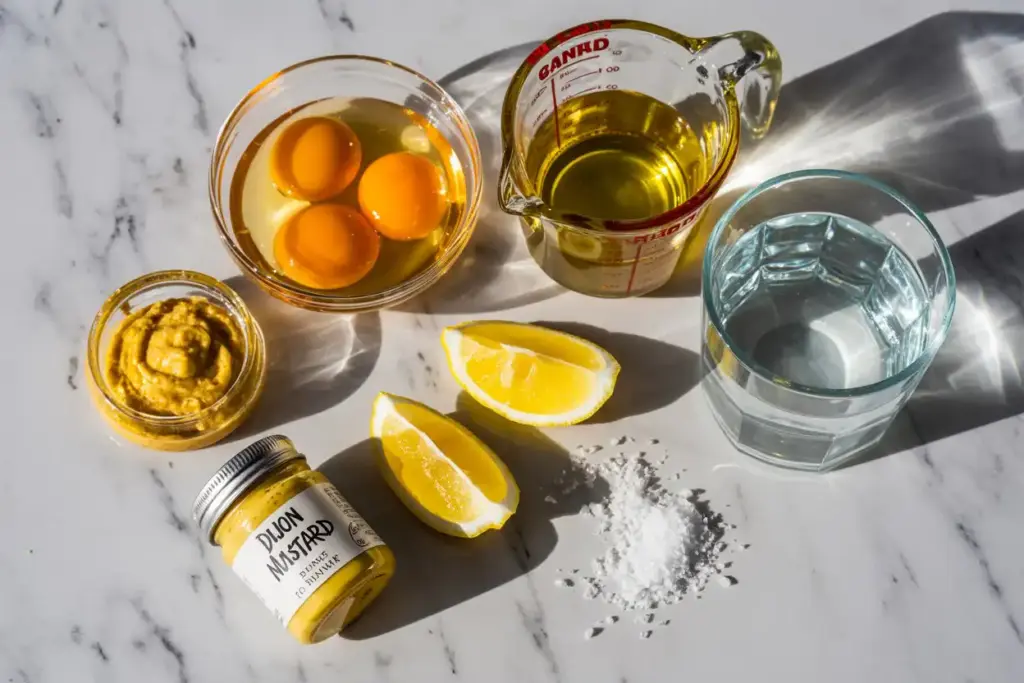
How To Make a Perfect Emulsion
The technique is the same whether you’re making mayonnaise, hollandaise, or a simple vinaigrette. Master these steps and every emulsion sauce falls into place.
- Start With a Clean Bowl and Cold Tools
- Any trace of grease in your bowl can prevent emulsification. For cold sauces, chill your bowl slightly. For warm sauces, use a heat-safe bowl set over a simmering pot – never direct heat.
- Whisk the Yolks First
- Beat the egg yolks with your acid (lemon juice or vinegar) and any mustard until slightly pale and thick. This primes the emulsifier and gives the oil tiny pockets to attach to.
- Add the Oil Drop by Drop – Slowly
- This is the most important step. Start adding your oil in a thin, steady stream – almost drop by drop. Whisking constantly. Adding too fast overwhelms the emulsifier and the sauce breaks.
- Increase the Flow Gradually
- Once the sauce is visibly thickening and you can see it holding together, you can increase the oil to a thin steady stream. Keep whisking – don’t stop to check your work.
- Season and Adjust
- Taste at the end. Add more salt, acid, or a splash of water to adjust consistency. The sauce should coat the back of a spoon and feel rich without being heavy.
- Serve Immediately or Store Correctly
- Warm emulsions should be served right away. Cold ones store beautifully in an airtight jar in the fridge. Both taste best the day they’re made.
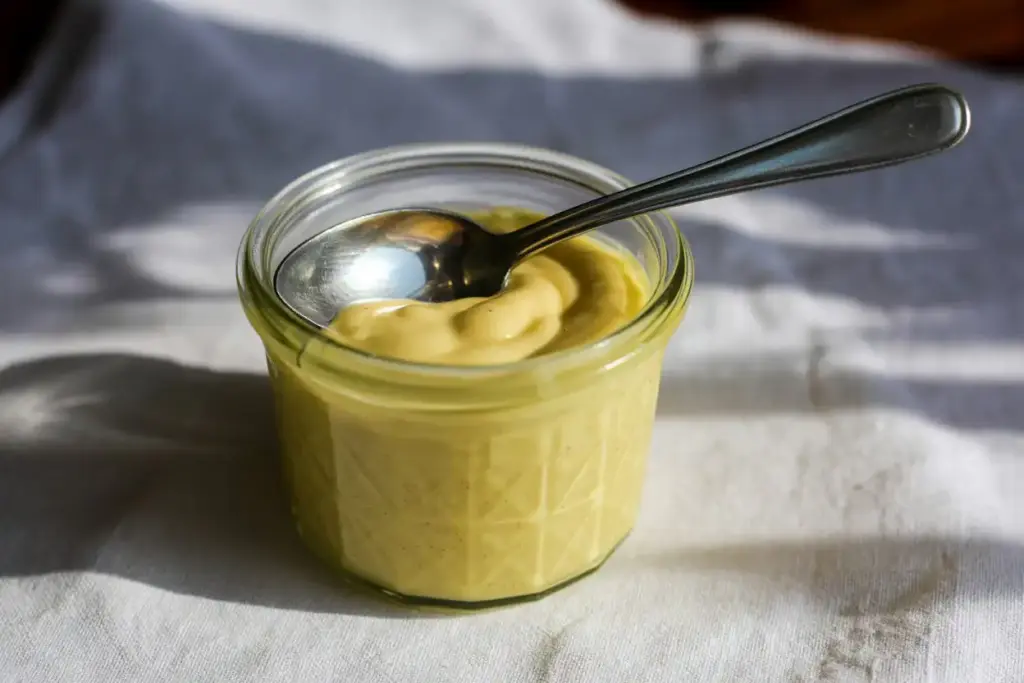
“So simple and fresh. The emulsion technique finally clicked for me. This is my go-to sauce guide.” – Zaid Mercer.
Tips For a Flawless Emulsion Every Time
- Room temperature egg yolks emulsify more easily than cold ones
- Adding oil too quickly is the single most common reason sauces break
- A blender or immersion blender creates a more stable emulsion than hand-whisking
- Use a bowl with a damp towel underneath – it keeps it from spinning while you whisk
- Slightly warm your bowl for cold emulsions – extreme cold slows emulsification
- Mustard isn’t just for flavor – it’s doing structural work in your sauce
- Acid added at the end brightens flavor; acid added at the start helps stabilize
- If the sauce feels too thick, a teaspoon of water loosens it without breaking it
- For warm sauces, keep heat gentle – high heat scrambles the yolks
- Taste as you go. Emulsion sauces need balancing, not just following a formula
How To Fix a Broken Emulsion Sauce
It happens to every cook. The sauce breaks, goes grainy, or turns into an oily puddle. Don’t panic – and definitely don’t throw it away.
The Cold Water Rescue – Quick Fix
Add a teaspoon of cold water to the broken sauce and whisk vigorously. Sometimes the shock of temperature and new liquid is enough to pull it back together.
Start With a Fresh Yolk – The Reliable Fix
Whisk a fresh egg yolk in a clean bowl, then very slowly whisk the broken sauce into it – exactly as you added oil to begin with. The new yolk re-emulsifies everything.
Use an Immersion Blender – Blender Method
Pour the broken sauce into a tall jar, add a fresh yolk, and blend with an immersion blender from the bottom up. One of the most reliable fixes for cold emulsions like mayonnaise.
Cool It Down First – For Warm Sauces
If hollandaise or béarnaise breaks, remove it from heat immediately. Let it cool slightly, then whisk in cold water or a fresh yolk off the heat before gently warming again.
Delicious Emulsion Sauce Variations
Once the base technique feels comfortable, the variations are almost endless. These are some of the most loved flavor directions to explore.
Saffron Aioli
Steep a pinch of saffron in warm water and whisk into your base aioli. Gorgeous golden color and a delicate floral depth.
Chipotle Mayo
Blend chipotle peppers in adobo into finished mayonnaise. Smoky, spicy, slightly sweet. Perfect for tacos and burgers.
Brown Butter Hollandaise
Use browned butter instead of clarified for a nuttier, more complex warm sauce. Spectacular over roasted asparagus.
Miso Vinaigrette
Whisk white miso into your vinaigrette base with rice vinegar and sesame oil. Deeply savory and slightly sweet.
Truffle Mayonnaise
A few drops of truffle oil stirred into homemade mayo. Outrageously good on fries, crostini, and poached eggs.
Herb Caesar
Add fresh tarragon, chives, and dill to your Caesar dressing base for a brighter, more garden-forward version.
Citrus Beurre Blanc
Use blood orange juice in place of white wine for a blushed, slightly sweet pan sauce that pairs beautifully with scallops.
Harissa Vinaigrette
Whisk a spoonful of harissa into a simple vinaigrette base. Smoky, warm, and deeply complex over roasted vegetables.
Delicious Ways To Use Emulsion Sauces
A great emulsion sauce doesn’t just complement a dish – it transforms it. Here’s where they shine brightest.
- Brunch
- Hollandaise over poached eggs, avocado toast, or crispy potato cakes. The classic weekend indulgence – and it’s done in minutes.
- Salads
- Caesar, green goddess, or a sharp vinaigrette. A homemade dressing turns a simple green salad into something worth remembering.
- Sandwiches
- Homemade mayo or aioli on a crusty baguette. Chipotle mayo on a burger. It’s the difference between lunch and a real meal.
- Grilled Proteins
- Béarnaise over steak. Beurre blanc beside grilled fish. Herb aioli with chicken thighs. Every protein has its perfect emulsion match.
- Vegetables
- Drizzle warm hollandaise over asparagus, broccoli, or artichokes. Toss roasted carrots in a miso vinaigrette. Incredible transformation.
- Dipping Sauces
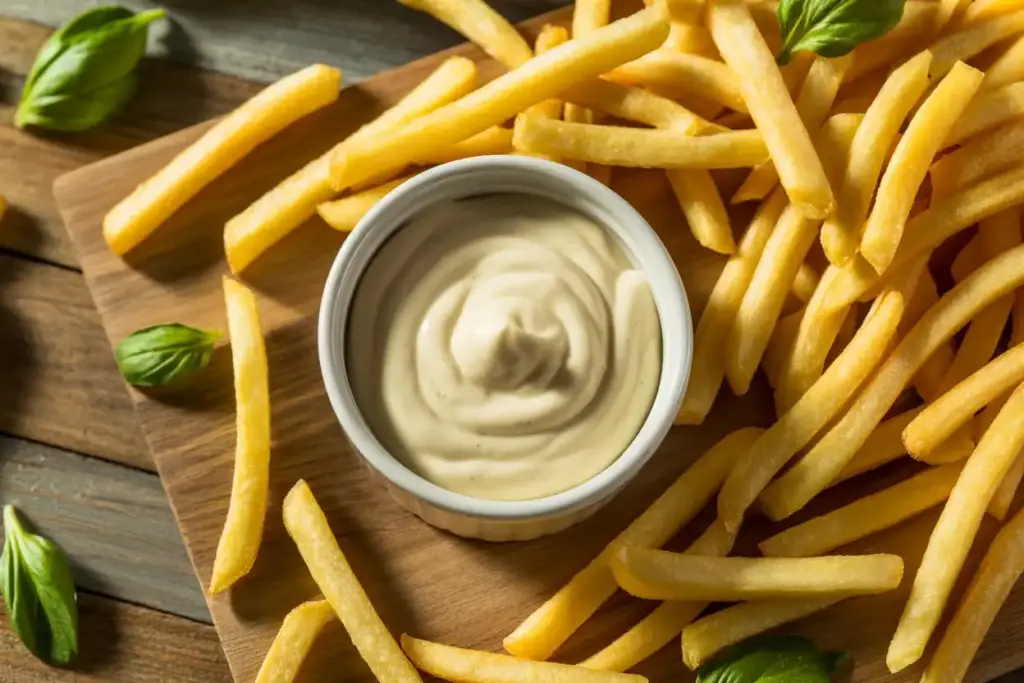
- Aioli for crispy fries. Truffle mayo with roasted potatoes. Caesar with crudités. Emulsion sauces were practically invented for dipping.
Storage & Shelf-Life Tips
- Always Refrigerate – Any sauce made with raw or lightly cooked egg yolks must be refrigerated immediately after making.
- Use Airtight Jars – Glass jars with tight lids keep cold emulsions fresh and prevent them from absorbing fridge odors.
- Shelf Life – Homemade mayo and aioli: 5-7 days. Vinaigrettes: up to 2 weeks. Hollandaise: use the same day for best results.
- Warm Before Serving – Cold emulsions from the fridge may thicken. Let them sit at room temperature for 10 minutes and stir well before serving.
- Freezing – Most egg-based emulsions don’t freeze wel, the texture changes significantly. Vinaigrettes freeze better, in small portions.
- Always Use Clean Spoons – Introduce bacteria and your sauce will spoil faster. A clean spoon every time keeps your homemade sauce fresh for the full shelf life.
FAQs
What are emulsion sauces?
Emulsion sauces are mixtures where oil and water-based liquids combine into a stable sauce using emulsifiers like egg yolks or mustard.
Why do emulsion sauces separate?
They separate when droplets merge back together, often due to incorrect temperatures, rapid oil addition, or insufficient emulsifiers.
What is the easiest emulsion sauce to make?
Simple vinaigrettes are usually the easiest because they require minimal ingredients and equipment.
Can emulsion sauces be made without eggs?
Yes. Mustard, yogurt, avocado, aquafaba, and nut butters can all work as emulsifiers.
How long do homemade emulsion sauces last?
Most homemade sauces last between 3 days and 2 weeks depending on ingredients and storage conditions.
What oil works best for emulsions?
Neutral oils like canola or grapeseed produce smooth flavors, while olive oil creates bolder tastes.
Mastering emulsion sauces opens the door to better cooking, richer flavors, and more confidence in the kitchen. Once you understand how oil, water, and emulsifiers interact, you can create everything from creamy dressings to elegant restaurant-quality sauces.
The best part is that emulsions aren’t complicated. With patience, the right technique, and a little practice, anyone can make silky, stable sauces at home.
Whether you’re whipping up a quick vinaigrette, blending homemade mayonnaise, or experimenting with healthy avocado dressings, emulsions bring texture and flavor together in truly delicious ways.
Start simple, keep whisking, and enjoy the process. Before long, you’ll be creating flawless emulsions like a seasoned chef.